I was in North Carolina for three days of holiday over the weekend. Since the weather was sunny and warm, we decided to take a day-trip to the Outer Banks. This long strip of inter-connected islands is a summertime resort paradise. Endless miles of sand beaches and ocean surf provide plenty of opportunities for families to play beachside.
Unfortunately, a good many of the hurricanes that wash ashore in NC scrub the islands which make up the Outer Banks. Between high winds and rain, this area gets devastated on an regular basis. You see the effects in terms of the local architecture - all of the beachside properties are built on stilts ! The only thing on the ground floor is the storage for boogie-boards and beach chairs !
One of the casualties in Nag's Head, NC was a monument called Jennette's Pier. It extends a thousand feet out from the shore, and provides opportunities for sight-seeing and fishing. When a hurricane washed ashore in 2003, hurricane Isabel slammed the coast of North Carolina. The pier was washed out to sea - completely destroyed ! In 2009, a rebuilding effort was commenced.
The pier has been completely rebuilt. Some 300+ new concrete pilings were sunk into the seabed, built to withstand the forces of nature. On top of these pilings was built what can best be described as an ecological laboratory. You see, Jennette's Pier is under examination for Leeds Platinum certification.
A quick look at the pier shows off the three horizontal-access wind turbines, generating much of the piers requirements for energy. And one of the shade pavillions on the pier is covered with photo-voltaic cells for solar generation. But the use of renewable energy doesn't end there ! Next there are some eighty wells dug for use by the geothermal HVAC system. Finally, there are also a number wave-actuated generators, situated on the seafloor. As the surf comes in & out, these generators wave back & forth, generating up to 300 W of energy every minute !
Being a public facility, and funded solely by voluntary $2 donations, any opportunity to recycle is welcome. Most interesting to me is the sign in the public washroom, which depicts the toilet and reads "Please don't drink or bathe from this facility. This water is 100% reclaimed !". The same is true of the fish-cleaning stations along the side of the pier. Rainwater is collected in lage cisterns, and re-used for cleaning fish, deck-washing, vehicle washing, and yes - flushing the toilets !
While the pier was originally built to support local anglers, when it was rebuilt it was to become an educational facility. The effort to rebuild the prier provided an opportunity to "re-think" the pier, and it's relationship with the ocean and beach around it. Personally, I was delighted to see all of the green technology in use and described for the visitors.
Showing posts with label conservation. Show all posts
Showing posts with label conservation. Show all posts
Sunday, June 24, 2012


Sunday, August 28, 2011
Renewable Energy & Open Source : the Master Project
Over the past year or so, I've been keeping a BLOG whose main focus has been Renewable Energy and Open Source. Many people have pointed out that these seem like wildly divergence topics. Interestingly, I think that quite the opposite is true.
Most people think of Open Source, and immediately think of Linux. While Linux IS a fine example of Open Source software, in which the creators share their work freely, and a community of enthusiasts contribute to help more people embrace the technology, Open Source isn't just about software. It's about the sharing and advancement of knowledge, ostensibly for the common good.
Another fine example of Open Source is the "open source ecology" work, being led by Marcin Jakubowsky. Take a look at their web site to understand the 50 individual projects which make up the Global Village Construction Set. Marcin's team is building a repository of all of the technology required to build the industrial machines required to build a modern civilization.
Similar (but not to the same extent) to Adam & Jamie on the Discovery television show "Mythbusters", I consider myself to be somewhat of a Gonzo engineer. That is to say I possess enough knowledge and skill to design & build some of the weird & wonderful ideas I have, without blowing up the house ! This translates into a willingness to try things for myself. Case in point, my son & I built our own Appleseed bio-diesel processor, having modified some plans we found on the Internet.
What does this have to do with Open Source, you ask ? The information on how the bio-diesel processor works, and the general plans to make it are freely shared. There are numerous forums which describe ways to modify the process, or challenges posters have encountered. The "community" is always there to lend a hand, and suggest ways to improve the process.
There have been numerous blogs written, and you-tube videos created that describe other forms of Renewable Energy projects. All are freely shared, with the hopes of encouraging OTHER people to try to build their own projects. The topics are wide-ranging, and often overlapping. In one project, the author takes you through the steps to manufacture pretty decent photo-voltaic panels for generating electricity. In another, the author shows you how to build a sun-tracking heliostat. Marry the two projects together, and with a little Gonzo engineering, you have all the information required to build a highly-efficient source of Solar energy.
So I have started to dream again... As I research and discover new projects, I am collating them into a larger master project: a completely self-sustaining lifestyle. Before you all start to groan, and ask if I have been smoking hemp for breakfast, let me explain the draw. I'm NOT interested in starting a hippie commune, and living off the grid. I'm NOT interested in starting a movement to save the planet. I'm NOT interested in any altruistic motives like lessening my carbon footprint.
What I AM interested in is the vaguely geeky, technological aspects of the projects themselves. I have been collating the various projects and information, trying to knit them together into something usable and consumable. My hope is to create a larger master-project of building a self-sustaining home. One in which the owner/builder would NOT be dependent on external sources of power to continue to live a modern lifestyle. One in which all of the components could be built by a homeowner with modest engineering talents.
Admittedly, some of the projects are more challenging than others, and would draw from a variety of skill-sets - some of which I possess, and some that I'd have to learn. And this is another part of the draw for me - a continued search for knowledge, that I can share as I learn.
In a future blog, I'll share some of my ideas for the Master Project, and start building the links to the sub-projects.
The opinions expressed in this post are purely those of the author. Opinions are like noses; everyone has one and they are entitled to it !
Most people think of Open Source, and immediately think of Linux. While Linux IS a fine example of Open Source software, in which the creators share their work freely, and a community of enthusiasts contribute to help more people embrace the technology, Open Source isn't just about software. It's about the sharing and advancement of knowledge, ostensibly for the common good.
Another fine example of Open Source is the "open source ecology" work, being led by Marcin Jakubowsky. Take a look at their web site to understand the 50 individual projects which make up the Global Village Construction Set. Marcin's team is building a repository of all of the technology required to build the industrial machines required to build a modern civilization.
Similar (but not to the same extent) to Adam & Jamie on the Discovery television show "Mythbusters", I consider myself to be somewhat of a Gonzo engineer. That is to say I possess enough knowledge and skill to design & build some of the weird & wonderful ideas I have, without blowing up the house ! This translates into a willingness to try things for myself. Case in point, my son & I built our own Appleseed bio-diesel processor, having modified some plans we found on the Internet.
What does this have to do with Open Source, you ask ? The information on how the bio-diesel processor works, and the general plans to make it are freely shared. There are numerous forums which describe ways to modify the process, or challenges posters have encountered. The "community" is always there to lend a hand, and suggest ways to improve the process.
There have been numerous blogs written, and you-tube videos created that describe other forms of Renewable Energy projects. All are freely shared, with the hopes of encouraging OTHER people to try to build their own projects. The topics are wide-ranging, and often overlapping. In one project, the author takes you through the steps to manufacture pretty decent photo-voltaic panels for generating electricity. In another, the author shows you how to build a sun-tracking heliostat. Marry the two projects together, and with a little Gonzo engineering, you have all the information required to build a highly-efficient source of Solar energy.
So I have started to dream again... As I research and discover new projects, I am collating them into a larger master project: a completely self-sustaining lifestyle. Before you all start to groan, and ask if I have been smoking hemp for breakfast, let me explain the draw. I'm NOT interested in starting a hippie commune, and living off the grid. I'm NOT interested in starting a movement to save the planet. I'm NOT interested in any altruistic motives like lessening my carbon footprint.
What I AM interested in is the vaguely geeky, technological aspects of the projects themselves. I have been collating the various projects and information, trying to knit them together into something usable and consumable. My hope is to create a larger master-project of building a self-sustaining home. One in which the owner/builder would NOT be dependent on external sources of power to continue to live a modern lifestyle. One in which all of the components could be built by a homeowner with modest engineering talents.
Admittedly, some of the projects are more challenging than others, and would draw from a variety of skill-sets - some of which I possess, and some that I'd have to learn. And this is another part of the draw for me - a continued search for knowledge, that I can share as I learn.
In a future blog, I'll share some of my ideas for the Master Project, and start building the links to the sub-projects.
The opinions expressed in this post are purely those of the author. Opinions are like noses; everyone has one and they are entitled to it !
Thursday, January 20, 2011
CFLs vs LEDs
There has been a lot of discussion recently about LED lighting technology. Many people will tell you that Compact Flourescent Light (CFL) bulbs do more harm that good. So I guess it's truly a matter of opinion.

Standard incandescent bulbs provide a high rate of resistance across the filament, which glows brightly. Typically, they are bought in terms of the watts of electricity consumed - in 25W, 40W, 60W and 100W varieties. This represents a fixed number of lumens.
But they are actually remarkably inefficient. Incandescent light bulbs waste up to 90% of the electricity they consume, by converting the watts of electricity into heat, rather than light. If you don't believe me, use your bare hands to unscrew a lit 100W bulb !
A colleague of mine argues that these bulbs are only inefficient IF you consider the heat by-product as a waste. I'm here to tell you that anyone depending on 100W bulbs to heat their home during the Canadian winter had best invest in heavy sweaters ! Sorry, Jon...
CFLs run much more efficiently, consuming significantly less electricity for

the same number of lumens. The common varieties are 13W and 25W bulbs, indicating they are approximately four times as efficient. While they are still warm to the touch, you can handle them with your bare hands. Further, they are reported to last seven times as long as incandescent bulbs. But they cost around $3 CDN a bulb.
In fact, the major concern about the CFLs is the fact that they contain mercury. So you can't just toss one in the garbage if & when it goes. well, I suppose you COULD, but it would be very irresponsible. So far, there have been no plans put forth to recycle them, although I am told that Home Depot & Ikea will take them.
Light Emitting Diodes, on the other hand, are very efficient. They are reportedly six times as efficient as incandescent light bulbs, and are reported NOT to burn out. Further, they contain no mercury ! But they are also wildly expensive by comparison. They cost about $28 CDN per bulb. This may be a red herring - if they never burn out, you never need to replace them, right ? But it the Return on Investment (RoI) is measured in decades, does it really matter ?
In my humble opinion, the big show-stopper is the fact that they are only really good for task-oriented lighting. They don't cast a glow, rather than a directed field of light.
So while CFLs represent a "band-aid" solution, according to my pal Dan, they are still more usable than LEDs. And they represent the mid-point for price, which should help with mass-adoption of energy conserving technologies - not the best, but certainly better than nothing at all.

The opinions expressed in this post are purely those of the author. Opinions are like noses; everyone has one and they are entitled to it !
Standard incandescent bulbs provide a high rate of resistance across the filament, which glows brightly. Typically, they are bought in terms of the watts of electricity consumed - in 25W, 40W, 60W and 100W varieties. This represents a fixed number of lumens.
But they are actually remarkably inefficient. Incandescent light bulbs waste up to 90% of the electricity they consume, by converting the watts of electricity into heat, rather than light. If you don't believe me, use your bare hands to unscrew a lit 100W bulb !
A colleague of mine argues that these bulbs are only inefficient IF you consider the heat by-product as a waste. I'm here to tell you that anyone depending on 100W bulbs to heat their home during the Canadian winter had best invest in heavy sweaters ! Sorry, Jon...
CFLs run much more efficiently, consuming significantly less electricity for
the same number of lumens. The common varieties are 13W and 25W bulbs, indicating they are approximately four times as efficient. While they are still warm to the touch, you can handle them with your bare hands. Further, they are reported to last seven times as long as incandescent bulbs. But they cost around $3 CDN a bulb.
In fact, the major concern about the CFLs is the fact that they contain mercury. So you can't just toss one in the garbage if & when it goes. well, I suppose you COULD, but it would be very irresponsible. So far, there have been no plans put forth to recycle them, although I am told that Home Depot & Ikea will take them.
Light Emitting Diodes, on the other hand, are very efficient. They are reportedly six times as efficient as incandescent light bulbs, and are reported NOT to burn out. Further, they contain no mercury ! But they are also wildly expensive by comparison. They cost about $28 CDN per bulb. This may be a red herring - if they never burn out, you never need to replace them, right ? But it the Return on Investment (RoI) is measured in decades, does it really matter ?
In my humble opinion, the big show-stopper is the fact that they are only really good for task-oriented lighting. They don't cast a glow, rather than a directed field of light.
So while CFLs represent a "band-aid" solution, according to my pal Dan, they are still more usable than LEDs. And they represent the mid-point for price, which should help with mass-adoption of energy conserving technologies - not the best, but certainly better than nothing at all.
The opinions expressed in this post are purely those of the author. Opinions are like noses; everyone has one and they are entitled to it !
Friday, December 31, 2010
People - There is No Silver Bullet !
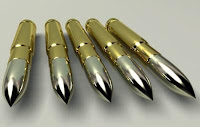
OK, we've got that behind us ! "We do ?" you ask yourself. What I mean is that there is no one single solution to the energy crisis we are facing. OK! I admit the word "crisis" is a tad alarmist, but we DO need to be concerned.
I am not going to jump on the climate-change bandwagon, hoping to spur the masses to action with (possibly) questionable science. Maybe global warming is happening, although you'd never know it where I live - woke up to -29C this morning ! But that's a different story...
Nor am I going to say that the likes of Al Gore and David Suzuki are alarmist tree-huggers. They believe that there is a crisis, while I think the jury is still out. For example, a significant portion of the Greenhouse Gases which are attributed to Global Warming come from bovine burps !
What I _DO_ know is this: we North Americans are addicted to fossil fuels. We use them to generate electricity and to power almost all modes of transportation. The most notable exception is the Nuclear Aircraft Carrier, but I suspect nuclear power is not viable for much else !
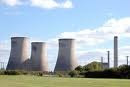
Cars, trucks, trains, planes and ships all run on some form of fossil fuels. And some 65% of the electricity generated in the USA is generated using coal. Hence, I believe that even the futuristic-seeming Electric Vehicles are "dirty" because their power also comes from fossil fuels.
"We"ll convert to Hydrogen !", some experts expound. Or "We should build high-tech nuclear plants !", other experts counter. There's a nightmare in the making !
There is no one single technology which can take over all of our energy requirements. I purposely state that no matter WHAT changes are made to whatever technology, our biggest challenge will be complacency. The change needs to be gradual, likely over one or more generations !
I keep wandering back to the paradigm. Is government-owned and regulated power the way to go ? Should we scale back and provide point-sources for power generation ? This would eliminate the need for a power-grid. Failures at one site wouldn't affect the next site.
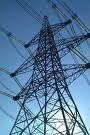
If each site - be it a building, a block of buildings, a village - took care of it's own energy needs, then we wouldn't see the massive catastrophes like 3 Mile Island and Chernobyl. We also wouldn't see the unsightly (OK - freaking UGLY) power-transmission towers which ensnarl the countryside. Efficient AND attractive - what a concept !
In most of my Renewable Energy postings, I focus on the local, small-scale types of projects. Individual photo-voltaic panels and solar hot-water systems are key to our success. I like micro-scale hydro and short-tower wind turbines. I like these as just about any homeowner could implement these solutions without incurring ridiculous costs. Further, they could easily become self-sufficient. Living "off grid" doesn't HAVE to mean you live in some rural, back-country area.
But one of the most important factors in these solutions is that each has it's own strengths and weaknesses. PV systems don't generate electricity at night. Wind turbines won't generate electricity on a calm day. You get the picture ?
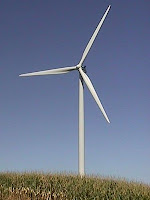
Hence, most experts agree that you shouldn't rely on just one system to supply your energy needs. Further, the best designed systems also allow for the inclusion of a gas or diesel generator to provide supplemental power. As you can see, the best practice would be to implement multiple solutions !
Once we agree that there is no Silver Bullet, we can start to look at effective ways of implementing many (if not all) of these renewable-energy solutions.
The opinions expressed in this post are purely those of the author. Opinions are like noses; everyone has one and they are entitled to it !
Tuesday, December 28, 2010
Renewable Energy Paradigm Shift
I was having a discourse with a fellow about renewable energy, when we landed on the topic of efficiencies. He held the belief that the efficiency of the power-generation scheme wasn't as important as the cost. In his mind that was the barrier to universal adoption.
It is generally held that solar photo-voltaic solar systems are only about 11% efficient. That means that they can only convert 11% of the solar exposure they receive to electricity. The rest goes untapped.
But what of other systems ? Wind systems are more efficient, at around
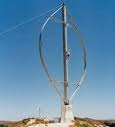
18%. It is due to the fact that it takes a fair amount of energy to start the turbine to spin. That is to say a lot of potential energy is wasted as it goes past the turbine, without enough force to actually turn it.
Much more efficient is the hydro-generation plant. Using nearly identical technology as the wind-turbine, it is at least three times more efficient ! This is because water is much denser than air. So less water has to pass through the turbine to get it to spin with the same force.
But at the end of the day, the system is only useful if we don't squander the energy we are learning to harness. In this particular discourse, my colleague and I drifted into talking about changing the paradigms of renewable energy.
To wit:
1) generate energy from renewable sources - no more dependence on dwindling resources
2) end the dependence on the rigid grid - no more huge power plants & transmission systems that can't handle fluctuating power-generation schemes like solar or wind
3) have each building be responsible for their own energy needs; this is the corollary to #2
4) change building practices to focus on "zero-energy" buildings
5) take advantage of every technology where appropriate & provide government-led incentives (taxes, etc.)
6) waste nothing - everything needs to be used purposefully & converted into something else that useful
7) take a "do no harm" attitude.

The paradigms need to be re-examined from the creation of power; the
effects on the environment of creating that power; the conservation of that power. Unless we, as a society, can accomplish these tasks, we will never be able kick the fossil-fuels dependency.
The opinions expressed in this post are purely those of the author. Opinions are like noses; everyone has one and they are entitled to it !
It is generally held that solar photo-voltaic solar systems are only about 11% efficient. That means that they can only convert 11% of the solar exposure they receive to electricity. The rest goes untapped.
But what of other systems ? Wind systems are more efficient, at around
18%. It is due to the fact that it takes a fair amount of energy to start the turbine to spin. That is to say a lot of potential energy is wasted as it goes past the turbine, without enough force to actually turn it.
Much more efficient is the hydro-generation plant. Using nearly identical technology as the wind-turbine, it is at least three times more efficient ! This is because water is much denser than air. So less water has to pass through the turbine to get it to spin with the same force.
But at the end of the day, the system is only useful if we don't squander the energy we are learning to harness. In this particular discourse, my colleague and I drifted into talking about changing the paradigms of renewable energy.
To wit:
1) generate energy from renewable sources - no more dependence on dwindling resources
2) end the dependence on the rigid grid - no more huge power plants & transmission systems that can't handle fluctuating power-generation schemes like solar or wind
3) have each building be responsible for their own energy needs; this is the corollary to #2
4) change building practices to focus on "zero-energy" buildings
5) take advantage of every technology where appropriate & provide government-led incentives (taxes, etc.)
6) waste nothing - everything needs to be used purposefully & converted into something else that useful
7) take a "do no harm" attitude.
The paradigms need to be re-examined from the creation of power; the
effects on the environment of creating that power; the conservation of that power. Unless we, as a society, can accomplish these tasks, we will never be able kick the fossil-fuels dependency.
The opinions expressed in this post are purely those of the author. Opinions are like noses; everyone has one and they are entitled to it !
Sunday, December 19, 2010
Nano-Scale Hydro Power Generation
Once again, I must confess that my perceptions continue to be challenged. Previously, I had posted that I wasn't particularly interested in Hydro Power generation, as I always perceived it as requiring a huge capital investment, usually by some government body. Further, I was very concerned about the upstream ecological impact of implementing a dam. I thought it was a requirement.

But I have since done some more research, and find out that smaller-scale hydro power has gone on for years. The classic water-wheels that were used for their mechanical potential in grinding wheat into flour are one example. More recently, instead of mechanical potential, they are used for the creation of electricity. In fact, they are many multiples more efficient than either wind or solar, owing largely to the density of the water itself !
Typically, simple implementations divert a portion of the flow (20% is considered more than reasonable) into a large pipe, which is then incrementally decreased. This increases the water pressure without changing the volume. The resulting "jet" of water flows past some form of turbine, which in turn adds mechanical potential to the generation of electricity. Finally, the water rejoins the original flow of water.
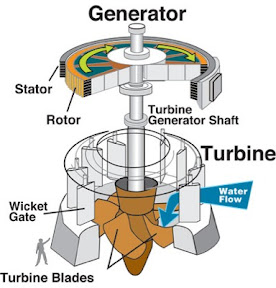
The other variables which in turn help determine how much electricity can be generated include head - how far the water falls, and friction-losses - does the flow of water slow down owing to turns or a pipe that's too narrow.
Since my focus is on renewable energy, hydro is remarkably attractive. Presumably, a stream or small river will almost always have some flow. The fact that it flows at all indicates it must have some head. And a stream-side implementation returns the water back to the stream or river. It is clean, non-polluting, and won't cause any upstream damage.
Couple a hydro system with wind & solar, and you have a system capable of creating electricity year round, regardless of what climate you live in !
The opinions expressed in this post are purely those of the author. Opinions are like noses; everyone has one and they are entitled to it !
But I have since done some more research, and find out that smaller-scale hydro power has gone on for years. The classic water-wheels that were used for their mechanical potential in grinding wheat into flour are one example. More recently, instead of mechanical potential, they are used for the creation of electricity. In fact, they are many multiples more efficient than either wind or solar, owing largely to the density of the water itself !
Typically, simple implementations divert a portion of the flow (20% is considered more than reasonable) into a large pipe, which is then incrementally decreased. This increases the water pressure without changing the volume. The resulting "jet" of water flows past some form of turbine, which in turn adds mechanical potential to the generation of electricity. Finally, the water rejoins the original flow of water.
The other variables which in turn help determine how much electricity can be generated include head - how far the water falls, and friction-losses - does the flow of water slow down owing to turns or a pipe that's too narrow.
Since my focus is on renewable energy, hydro is remarkably attractive. Presumably, a stream or small river will almost always have some flow. The fact that it flows at all indicates it must have some head. And a stream-side implementation returns the water back to the stream or river. It is clean, non-polluting, and won't cause any upstream damage.
Couple a hydro system with wind & solar, and you have a system capable of creating electricity year round, regardless of what climate you live in !
The opinions expressed in this post are purely those of the author. Opinions are like noses; everyone has one and they are entitled to it !
Friday, November 26, 2010
Compost as Bio-Fuel
Those of you who have been following my posts on Renewable Energy will have seen that I focus primarily on Solar and Wind power generation projects. I have a passing interest in hydro-generation, but it is merely a curiosity for me. Today, my web-trolling took me in a new direction !
 The French Innovator, Jean Pain, pioneered a new form of bio-fuel, which he used to provide all the energy he required to run his modest farm. At the heart of his system was compost !
Composting is the biological process by which organic matter is broken down. It can then be used as a rich soil additive and natural fertilizer.
Pain was not a scientist - rather, he was a keen observer. He realized that if he reached into the center of his compost heap, the temperatures were high enough to burn his skin. Further, he found that a bi-product of the composting process was methane gas. He then used a little gonzo engineering and devised a process to capture both the heat and the methane, so that he could harness their energy on his little farm.
It should be noted that his yield was not insignificant. He could produce some 500 cubic meters of methane gas in just 90 days. Enough to power two gas ovens and a three-burner stove for a year. He also made a simple carburetor modification to his truck so that it too could be methane-powered. Lastly, he had a methane-powered generator to produce electricity for his farm. For clarity's sake, methane is more commonly referred to as Natural Gas.
 His was an interesting contraption: the heart was a hermetically-sealed tank, filled three-quarters full with organic matter (macerated tree limbs and brush) which had been steeped in water for 60 days. As the contents decomposed, creating methane which he siphoned off, the heat byproduct was captured by a 200 food coil of tubing - a crude heat-exchanger. The whole works was buried in a 50 ton compost heap, which in turn generated it's own heat. The main "plant" (sorry, but I really couldn't resist !), was some six meters wide and three meters tall.
The compost heap itself was a mix of all sorts of organic matter, including finely chopped tree limbs, brush, clippings and the wastes from their kitchen - all of which was freely available on his farm. He built his contraption using tools and equipment commonly found on his farm, including some 24 truck inner-tubes, which served as the bladder he collected the methane gas in.
Pain was a scientist and an engineer. He was also a conservationist. He is the modern inspiration of the so-called green movement.
*** Author's Note :: Astute readers will note that I have highlighted the term "organic matter" a number of times. The proper definition is that of matter which is capable of decay. In the last year or so, Marketing-types have tried to create a definition to mean "free of pesticides and fertilizers". I personally despise that term & challenge any and all marketing types to show me a NON-organic carrot ! ***
The opinions expressed are purely those of the author. Opinions are like noses - everyone has one, and they are entitled to it !

Composting is the biological process by which organic matter is broken down. It can then be used as a rich soil additive and natural fertilizer.
Pain was not a scientist - rather, he was a keen observer. He realized that if he reached into the center of his compost heap, the temperatures were high enough to burn his skin. Further, he found that a bi-product of the composting process was methane gas. He then used a little gonzo engineering and devised a process to capture both the heat and the methane, so that he could harness their energy on his little farm.
It should be noted that his yield was not insignificant. He could produce some 500 cubic meters of methane gas in just 90 days. Enough to power two gas ovens and a three-burner stove for a year. He also made a simple carburetor modification to his truck so that it too could be methane-powered. Lastly, he had a methane-powered generator to produce electricity for his farm. For clarity's sake, methane is more commonly referred to as Natural Gas.
 His was an interesting contraption: the heart was a hermetically-sealed tank, filled three-quarters full with organic matter (macerated tree limbs and brush) which had been steeped in water for 60 days. As the contents decomposed, creating methane which he siphoned off, the heat byproduct was captured by a 200 food coil of tubing - a crude heat-exchanger. The whole works was buried in a 50 ton compost heap, which in turn generated it's own heat. The main "plant" (sorry, but I really couldn't resist !), was some six meters wide and three meters tall.
The compost heap itself was a mix of all sorts of organic matter, including finely chopped tree limbs, brush, clippings and the wastes from their kitchen - all of which was freely available on his farm. He built his contraption using tools and equipment commonly found on his farm, including some 24 truck inner-tubes, which served as the bladder he collected the methane gas in.
Pain was a scientist and an engineer. He was also a conservationist. He is the modern inspiration of the so-called green movement.
*** Author's Note :: Astute readers will note that I have highlighted the term "organic matter" a number of times. The proper definition is that of matter which is capable of decay. In the last year or so, Marketing-types have tried to create a definition to mean "free of pesticides and fertilizers". I personally despise that term & challenge any and all marketing types to show me a NON-organic carrot ! ***
The opinions expressed are purely those of the author. Opinions are like noses - everyone has one, and they are entitled to it !
Thursday, November 25, 2010
Conservationism and Renewable Energy - What can YOU do ?
In a conversation recently with a colleague, he was very interested in the theme of renewable energy. But he tempered his enthusiasm, stating that he really couldn't contribute to the field. Rather, he was looking for ways to take advantage of advances in the field.
We can't all live on acreages, giving us lots of space to build high towers for wind-turbines. Nor do we all have access to a flowing river or stream to take advantage of hydro-power. Finally, most municipalities frown upon the erection of solar panels in urban settings (although this trend is changing).

"So how can I participate ?" asked my urbanite friend.
Depending on what your goals are, you have many options, but they all fall back to a single definition - Conservationism. By not contributing to the problem, you are still participating in the solution. Whether your goals revolve around lessening your carbon footprint, or lowering your hydro bills, you need to minimize (conserve !) the resources you use.
10) change the set point on your thermostat. If you live in a cold climate, setting the thermostat to 19C in the winter will reduce your heating bills by up to 17% ! if you live in a hot climate, running the AC less (set it to 24C) will keep the temperature comfortable, while saving you money.
 9) switch to compact fluorescent light bulbs. Here in Canada, you cannot buy incandescants anymore. They use roughly 10% of the energy of standard incandescent bulbs, and last 7 times longer on average.
8) turn down your hot water heater. Setting it at 49C rather than 60C will make a 30% difference on your energy bill, and lessen your carbon footprint significantly.
7) install a "green" toilet. They have two flush modes, depending on whether you need to expel liquid or solid waste. These toilets use 60% less water, as measured on a household of four people.
6) turn off the darn lights ! If you're not in the room, what do you need to see ?
5) wrap your hot-water heater in an extra layer of insulation. Your hot-water heater is the single largest energy consumer in your household. Give it every chance you can to be as efficient as possible.
4) check the seals around your windows and doors. When they are closed, a lit candle will flicker if air is sneaking past. That flicker means you are trying to heat or cool the entire neighborhood !
3) turn the water off while you brush your teeth. All that clean water going straight down the drain...

2) fix dripping taps & leaky fixtures quickly. A tap dripping slowly for one day can waste as much as 29 litres of water !
1) install a 7 day programmable thermostat. It will remember to lower the temperature at night, and during the day when nobody is home.
These simple changes can be done in any property, whether you own or rent. If you do these 10 things you will achieve your goals - you'll be contributing to the solution, rather than the problem. Oh, and you'll enjoy lower energy and water bills, too !
The opinions expressed are purely those of the author. Opinions are like noses - everyone has one, and they are entitled to it !
Subscribe to:
Posts (Atom)