Showing posts with label Apple. Show all posts

Saturday, November 30, 2013

Cloud - Software As A Service (SaaS)

One of the first ways in which the Internet started transforming itself into "The Cloud" was through software. In the early days of computing, software was a big deal. Teams of software engineers would spend days, weeks or even months deploying their software into a client's computing environment. In those days, the big packages ran on mainframes - huge, wildly expensive, monolithic compute platforms, typically owned by banks and insurance companies.

Later, as the PC era dawned, companies like Microsoft and IBM recognized just how popular these systems would be. So they encouraged development of PC-based software by marketing their development kits. A footnote in history is that IBM missed this eary trend, and chose to try to generate revenue from their software development kits. Developers abandoned IBM's OS/2 platform in favour of Microsoft Windows, as Microsoft gave their software development kits away for free at Developer Conferences. Suddenly, there was all kinds of software available for the Windows platform !

Software became a consumer product - shrink wrapped boxes sold at big-box office-supply stores like Staples and Office Depot. Early on, these were merely "single use" copies of packages that consumers had gotten used to using at work. Titles like Microsoft Office and Lotus 123 were popular. Soon after came games and other amusements. And with the rise of PC popularity came the rise of malware. By giving away their software development kits, Microsoft unwittingly opened the kimono to early malware developers ! And so followed the rise of utility software, such as Norton AntiVirus and PC-Doctor.

In those days, the Internet was still in its infancy. Typically accessed via dial-up modem, and through a University or College campus, it was still very much a novelty. Slow & cumbersome, it was not really the Internet we think of today at all ! But as the Internet became commercialized, and cable or telephone providers brought the Internet into our homes & places of business, the demand for ever-higher data speeds increased. This was critical to the development of Software as a Service. Interestingly, the notion of paying for a product or service via the Internet was born about the same time. The sordid side of the story is that it was pornographers who pioneered the methods for accepting credit card payments online !

Apple hit upon the idea that the device (laptop, tablet, mobile device) was merely for consumption. And so they started with iTunes - building a business model whereby the device was the access-point to the Music Store. Following this model, the "App Store" was born. Apple didn't want to include the middle-man. Why not have the consumers directly download their software from Apple. They even went so far as to remove optical media devices (DVD/CD-ROMs) from their hardware.

Other companies had similar business models. SalesForceDotCom (SFDC) believed that the web-browser should be all a client needed to access their popular Customer Relations Management software. Previously, CRM was the domain of big enterprise customers, and was implemented by a team of software engineers. Requiring a high degree of customization, CRM providers like SAP and Siebel generated high revenues through their professional services teams. But SFDC changed that model. Being web-based, and easily available via the open Internet, SFDC makes it's revenues on a subscription model, similar to a magazine or a newspaper. But without requiring dedicated, on-premise hardware, large up-front software purchases and implementation teams, companies of all sizes flocked to SFDC.

SFDC's new subscription-based software service became the model many companies want to emulate. Microsoft now provides Office365 on a subscription basis. Adobe provides their image-editing software on a subscription basis. So when you start thinking about "The Cloud", think about Software as a Service. Stated even more plainly, think about a subscription-based business model.


Sunday, May 29, 2011

Tablet Wars : Part 2


I had coffees with my friend Marc this week. As usual, I arrived about 5 minutes late. Marc was passing the time, playing with his shiny new Playbook. Having never really gone "hands-on" with one, I asked permission to take a look. It was all the zippy, functional-UI goodness that I expect from a Blackberry device.

We then spent a few minutes comparing my first-generation iPad to his first-generation Playbook. Fortunately, Marc & I are both adults so there was none of the usual "My tablet is better/bigger/stronger/faster/sexier" than your tablet nonsense. Both of us being IT Professionals, we centered more on the device's utility.

Of course, the two most common things that people centre on in a discussion of tablets are the Apps and Flash. While Adobe maintains that if you don't have Flash, you're missing out on an awful lot of web-content, I don't really feel like I have been missing anything.

Apple's viewpoint is that Flash is a resource-hog, and I tend to agree. Watch any Flash-based video sites, and you will hear your fan speed up as the processor & RAM generate more heat ! And given the precious few resources you can cram into the tiny form-factor, Flash is a non-starter.

Further, conventional wisdom tells us that just because you CAN do something, doesn't mean you SHOULD. I have seen demonstrations of Flash on Xoom devices and Galaxy Tab devices. Flash functions, but barely. Hardly what I would characterize as a serious differentiator !

So the conversation turned to the Apps. An article I read this week indicated the Apple App Store had surpassed 500,000 Apps, while the Android Marketplace had 78,000.


Worse, I've started reading articles which indicate Android developers are struggling to monetize their creations. Marc's counter-point asked a simple question: "How many of those Apps are BUSINESS Apps ?". He runs a small-ish IT shop at an energy company, and manages a tight budget.

This led me straight to the one app, released the same day as the iPad, which made the iPad a serious business machine from Day 1. I asked Marc to fire up Microsoft Visio on his tablet. He looked at me in disbelief & said it wasn't possible. Microsoft would never publish an App for an Apple device ! No, he's right, of course. But Citrix will enable it !

Enter the Citrix Receiver for iPad. Most major corporations and companies take advantage of Citrix's XenApp and XenDesktop technologies. They all for applications and desktops to be maintained and published from a central location, while presenting a small stream to the client. The stream represents the video display, as well as keyboard and mouse inputs.

Many would push back, stating that since Visio isn't really running natively on the tablet device, it doesn't really count. I would counter that with a single free utility, I can enable the iPad to run virtually ANY business application I need. And still be able to play Angry Birds on the commute home !

The opinions expressed in this post are purely those of the author. Opinions are like noses; everyone has one and they are entitled to it !

Saturday, May 7, 2011

Tablet Wars


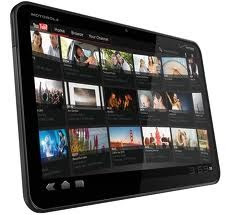
There's been a lot of press about Tablets lately. Until recently, Apple's iPad was the only game in town. But Samsung released the Galaxy Tab, Motorola released their Xoom, and Research in Motion recently released their Playbook. Apple just released the second generation of the iPad, which dealt directly with some of the initial criticisms of the platform, as well as making it smaller and faster.

Early on, the industry analysts were wondering how large the potential market was. Apple sold almost 1 Million iPads in the first month it was on the market. In all, Apple has sold more that 15 Million iPads, and are on track to sell 8 Million iPad2's.

Early sales of the Motorola Xoom are disappointing, by comparison. In their first quarter, analysts estimate that there have been 250,000 units shipped. This leads us to the question - is this a "Tablet Market" or an "iPad Market"? Recent reports show that the Apple products (first & second generation devices combined) control 82% of the market.

Interestingly, Microsoft is being left behind, and is none too happy about it.


Two years ago, Steve Ballmer showed off an HP Slate, running the Windows 7 operating system. Criticism was harsh ! The concern was that a Windows platform takes far too long to boot up & shut down, and is not "finger friendly". Further, HP has acquired the Palm Web-OS. And the Slate will continue it's development on that platform. Sorry Steve...

RIM's Playbook showed great promise, and the hope was that it would provide a MORE business-friendly tablet interface. But the critics panned it as well, calling it "rushed and incomplete". Worse, the reliance on "bridge" software to allow the device access to the email, contacts & calendar information is not allowed for use on AT&T's network ! And you can't use them without it !

The Xoom is exciting in that it is the first iteration of the Android v.3 (AKA Honeycomb) operating system. But the fact that it is (sort of, OK not really) based on Open Source Software is simply not enough.

The big buzz in the tablet world is the fact that the iPad doesn't support Flash - a technology for building games & applications to be delivered in a web-browser. But even on the tablets which DO support Flash, it's performance is lackluster and prone to crashing.

The message IS clear - it's an iPad market, not a tablet market. Apple has successfully created a market, one which it continues to dominate.


The opinions expressed in this post are purely those of the author. Opinions are like noses; everyone has one and they are entitled to it !

Monday, April 25, 2011

Changing How We Consume Media !

Those of you who have been following my various rants and diatribes will recall that I have many interests. Not only am I keenly interested in Renewable Energy and Open Source Software, but I am also curious about the ways in which technology is changing our lives.


In a previous post, I described my research into building out a media-centre and home-automation solution. The business case has been written and tacitly approved, now we're just waiting for this Year's budget to be released ! Hopefully, in a future post, I'll describe the components and article how I constructed my solution.


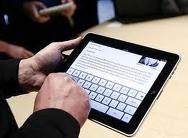
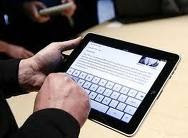
In the meantime, my tinkering continues. I bought an iPad last year. What a truly game-changing device that has become. Effectively, my MacBookAir has not left my desk as an ultra-portable computer since I acquired "Tabitha". My wife likes to name the items I'm in love with - Tabitha was a great choice ! Since then, my wife has also acquired an iPad. Now the kids are wondering when THEY will get one...

As part of my quest to change the way we consume media, I have been carefully playing with Apple's offerings. I can stream audio to various sets of speakers in the house, using Apple's AirPlay. Further, I can use any iOS device - iPhone, iPod Touch, iPad - as either the source of the music, or to remotely control the playback. This is relatively straightforward goodness.


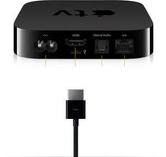
Apple extends this paradigm with the second generation AppleTV. It allows you to stream audio/video from iTunes to a television set - wirelessly ! This is pretty cool too, because it continues to set up iTunes as my media hub. Further, it connects to my TV via HDMI, so I can continue to watch all the High-Def media I pay extra for !

But what about Tabitha ? Apple seems to have neglected these wonderfully mobile, media consumption devices ! Using pure Apple technologies, I cannot stream to the iPads & iPods we love. Fear not, AirVideo to the rescue ! For $2.99 I installed the AirVideo app onto my iPad. I download a free "server" component to my Media Centre (for the Proof of Concept, my MBA). I can now access the folder where my movies & TV shows live & stream them wirelessly to Tabitha !

AirVideo is also AirPlay-enabled, so I can watch the content on Tabitha, while receiving the audio via speakers connected to my Airport Express wireless access point(s). Better still, the audio & video are well-synced, thanks to Apple's RAOP protocol. In the past, minor differences in network lag would cause the audio & video to present a second or two out of sync, diminishing the experience.

The final thing I have come to love is the fact that the AirVideo service on the media centre is completely separate from iTunes. Currently, iTunes only allows on stream at a time. You can't watch one TV show over the AppleTV in one room, while listening to a music stream in another. Air Video allows you to watch multiple iOS streams at the same time !

A single word of caution... If you want to get into streaming video and audio wirelessly, invest in the latest 802.11N wireless access points. When I watch a video on Tabitha, and my son streams YouTube videos to his iPod, there's very little bandwidth left on an 802.11G access point. I intend to spend the $200, and uplift to Apple's Airport Extreme base station.


The opinions expressed in this post are purely those of the author. Opinions are like noses; everyone has one and they are entitled to it !

Sunday, October 3, 2010

W.W._I_D ? - Part 2 :: The Quest Continues !

So I have been continuing my research into the "Utlimate" DIY, low-cost Home-Automation and Media Centre configuration. As you may recall, I am a little envious of my friend's installation, but do not have anywhere near the budget he had. So I have scoured the web, and I think I have come up with my solution.

You will further recall that I tend to swing towards the Open-Source side of the software world, and am keen to do as much as possible for myself. But, I also want commercial-level support where possible. Trust me, the ability to call up a 1-800 number and ask "OK, what did I mess up THIS time ?" is of great value to me. Further, I would think any reader of this post would also be appreciative ! ;-)

On the Audio/Visual (A/V) side, I am quickly settling into a free (open-source at its best !) software package for Mac OSX called Plex. It provides an overlay to ALL of your digital content, including iTunes, NetFlix, etc and creates its own master index & streaming capabilities. So from the one gorgeous interface, I can play back HD Video, Music & Photos. Finally, content can be streamed to remote TV devices, using Apple's new AppleTV.

But then I also have some other interests... I am keenly interested in Home Automation. In being able to control ambient lighting, and to set "scenes" - automatic pre-sets for watching a movie, or hosting a party, or being away on vacation.  Also the ability to control climate - like setting the thermostat remotely - would be most valuable.

For this, I have settled on another Mac OSX application called Indigo. It is another native Mac application which can interface with either X10 or Insteon control devices. It understands the concepts of security and event-triggering. Imagine a guest has entered your driveway. The system could turn on the porch light, ring a chime & flash a video image onto a monitor - perhaps even the TV itself !

Especially interesting is that these two solutions are compatible with each other ! This means you can control BOTH applications from within one interface. Both applications take advantage of the Apple App Store to publish remote-control applications for iPad/iPhone/iPod. Amazingly, the same Apps allow you to stream the A/V content to both the iPad and the iPod/iPhone platforms !

The next component I am settling onto is the new Apple Mac Mini. It can run OSX-Server, meaning it can also serve as the house E-Mail, DNS, and Web-Server. It can interface with a TimeCapsule and turn it into an industrial-strength firewall, securing us from the Internet. But I would be sure to buy the non-server version - it comes with a DVD built in, meaning you can play DVDs on your system as well - and purchase OSX-Server separately. It is a nice-to-have for me, but not required for this project.

It will also serve as the Media Centre, being directly attached to the main TV via HDMI. Using a product called eyeTV-HD from elgato, you can watch live TV from their video capture device. It sits between the Set-top cable Box and the Mac Mini. Then the content is delivered by the afore-mentioned HDMI cable. Since it stands in between the Cable box and the Mac Mini, the Mac Mini can become a Digital Video recorder, allowing you to record any broadcasts for later viewing - kind of like a TiVO, but without the monthly subscription, and supporting High-Definition video in Canada.


So the one media centre can centrally manage & store content for the entire house. Further, it becomes the nerve centre for the Home Automation project. My first estimate is that the whole project will cost ~ $3500 CDN, which includes all of the Insteon/X10 modules ! An order of magnitude less expensive than my friend's system, and all running on Apple equipment. Muy bueno !

The opinions expressed are purely those of the author. Opinions are like noses - everyone has one, and they are entitled to it !

Tuesday, September 28, 2010

WW_I_D ? (What would I do ?) :: Home automation & media streaming...

Lately, I have been turning my attentions towards new diversions. While I am still keenly interested in alternative energy sources, and how we could better commoditize their implementations, I am also still interested in Open-Source Software. As many of you may know about me, I have a the Red Hat "Shadowman" logo tattooed on my chest !

I watched with admiration and a teeny, tiny bit of envy as a good friend of mine did an rather extensive renovation to his family's home. Of great interest to me was his new multi-source media system. From a central location in his data-room, he can stream high-definition video & audio to any room in his house.

It has multiple sources, including satellite TV, AppleTV, iTunes, as well as a data-storage unit filled with MP3s & MP4s (videos). The house has been carved up into A/V "zones", each with its own programmable remote, controlling all aspects of the media being played.

I started to think about how _I_ would approach this... Also, I happen to know that my friend spent a considerable amount of money installing this system. Since I have nowhere near that kind of budget, I started to explore some Open-Source alternatives...

I absolutely love my friends media-streaming capabilities, but wondered "Does it have to stop there ?".  How about adding in home-automation ? Could I also control climate & lighting in the same way ? That's when I stumbled up the LinuxMCE Project . In fact, they take it a couple of steps further, bundling a VoIP Telephone solution and Home-Security. WOW !

It is built upon a linux distribution called Ubuntu . And then the other technologies are layered on. Drivers for control-devices from X10 and Insteon are built-in, making it an extremely flexible system, suitable for all budgets. My only concern actually lay in one aspect of the solution - how much do I have to mess around importing songs, movies & other media for streaming ?

In a much more proprietary format, Apple has been working on media-dsitribution for years. The foundation is iTunes - not really an application so much as a means of purchasing media content from Apple ! They then layer on products to "assist" in those purchases... Through the use of the AirPort Express (a wireless Access point with ports for printer & speakers), I can stream music from iTunes on my laptop to the speakers I plug into the APE.

Just a few days ago, Apple announced AirPlay, which allows the streaming of video content to compatible devices, including the newly re-engineered AppleTV. It is a wireless device which has a high-definition cable I plug into my TV. So I can stream a movie, either from my iTunes, streamed from Apple, or from Netflix - which is now available in Canada !

So what if I built an iTunes-based media server, and streamed content to the AirPort Expresses and to some AppleTV devices. It would represent a well-designed system, with great commercial-grade support, and not completely destroy my budget ! Take it one step further - I could control all the playback from the Apple Remote application on my iPod/iPhone/iPad... Very swish !

So I can control the media streaming with Apple's products for a couple of thousand dollars. Then I can start on the home-automation path with LinuxMCE. So then I can create lighting & climate "moods" appropriate to my needs - like watching TV, or hosting a party. If my control device is an iPhone or an iPad, I ca control things when I am not even at home ! How cool is that ?!?

The final layer - what about installing a software-based phone application on my control device. I could either install microphones in each room & have the system decide where to route calls to, or use a headset - bluetooth or otherwise.

As you can see, the opportunities are endless. I am quite excited about this project, although I am still in the early stages of writing the business case for approval from the Minister of Finance (aka my wife !).

The opinions expressed are purely those of the author. Opinions are like noses - everyone has one, and they are entitled to it !